
From a Small Room in the East Village to a National Brand
In 2006, Death & Co opened in Manhattan's East Village, an intimate room built on a simple conviction: that hospitality could be both artful and rigorous, and that the details mattered.
Founder and CEO David Kaplan didn't come up through traditional restaurant tracks. He had studied fine art in New York, and he entered hospitality the way many great concepts do: with ambition, intuition, and a willingness to learn fast, sometimes in public.
Within days, Death & Co found itself in the spotlight. Demand surged. The early years were equal parts craft and chaos, no modern systems, limited infrastructure, and a team building the plane while flying it. What emerged from that pressure was not just a busy bar, but a point of view: a standard for technique, service, and the kind of atmosphere people still try to replicate.
"When you're 24, ignorance is one of the driving factors that allows you to accomplish things that otherwise don't particularly make sense. I thought it was completely rational to open a business in which I had no experience."
— David Kaplan, CEO and Founder (featured on CNN's Quest Means Business)
Nearly two decades later, Death & Co, operating under parent company Gin & Luck, has grown from a single bar into a multi-vertical hospitality company. When it came time to fund expansion, the team made a deliberate choice: raise capital with the community that helped build the brand in the first place.
Through community raises powered by DealMaker, Gin & Luck raised $9.3M+ from 2,764 investors, turning loyal guests into long-term stakeholders.
A Legacy Built on Craft (and Proof)
Death & Co's reputation wasn't manufactured. It was earned over years of consistent execution. The brand's bars and books have been recognized across the industry, including major honors within cocktail culture and culinary publishing.
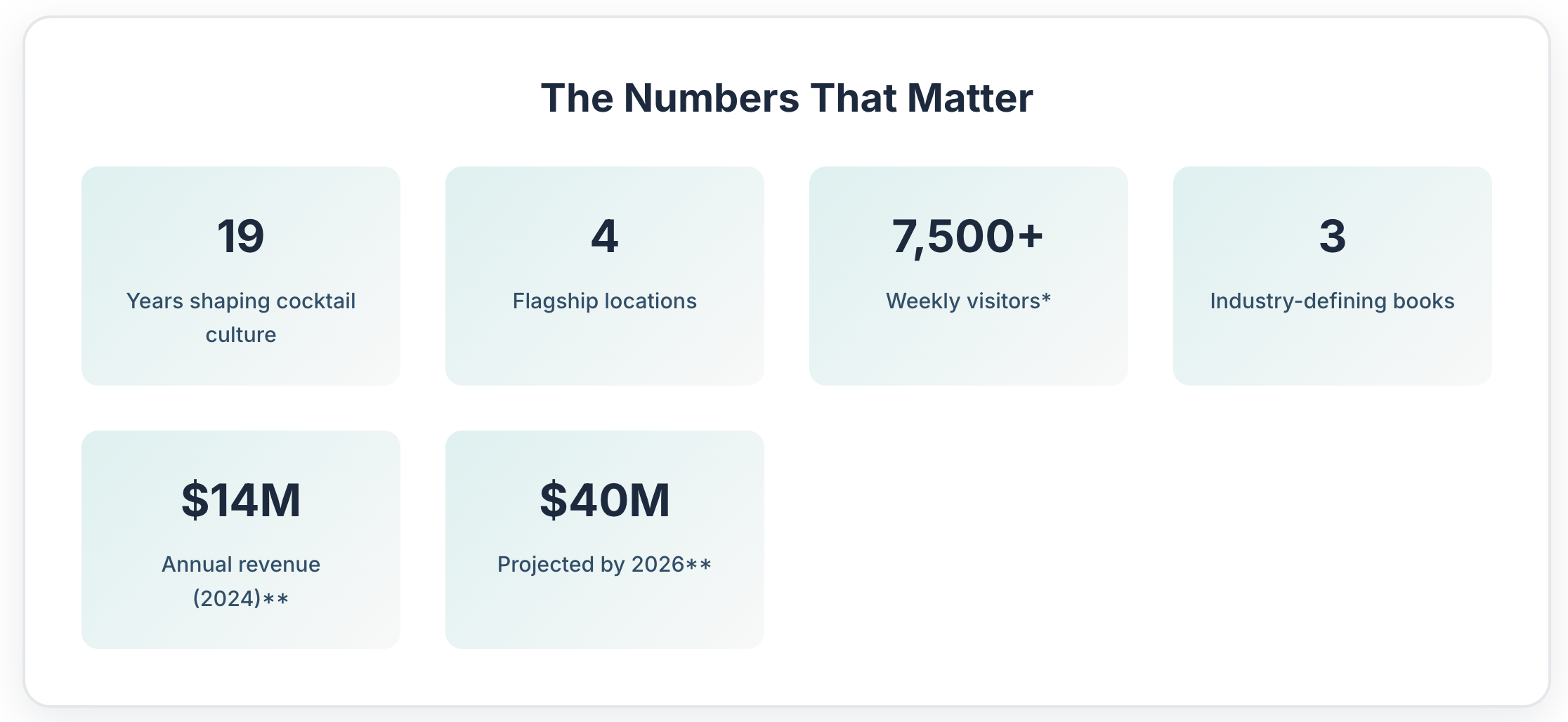
But the story has never been just volume. Death & Co became influential because it built a repeatable experience: training, technique, hospitality language, and a culture of precision that traveled well.
*As reported by the company. **Company projections.
The Challenge: Growth Without Dilution
For founder-led hospitality brands, the tradeoffs are real. Traditional capital can come with expectations, speed, uniformity, control, that may conflict with craft-first execution.
