Raise Capital
Products
Resources

August 11, 2026
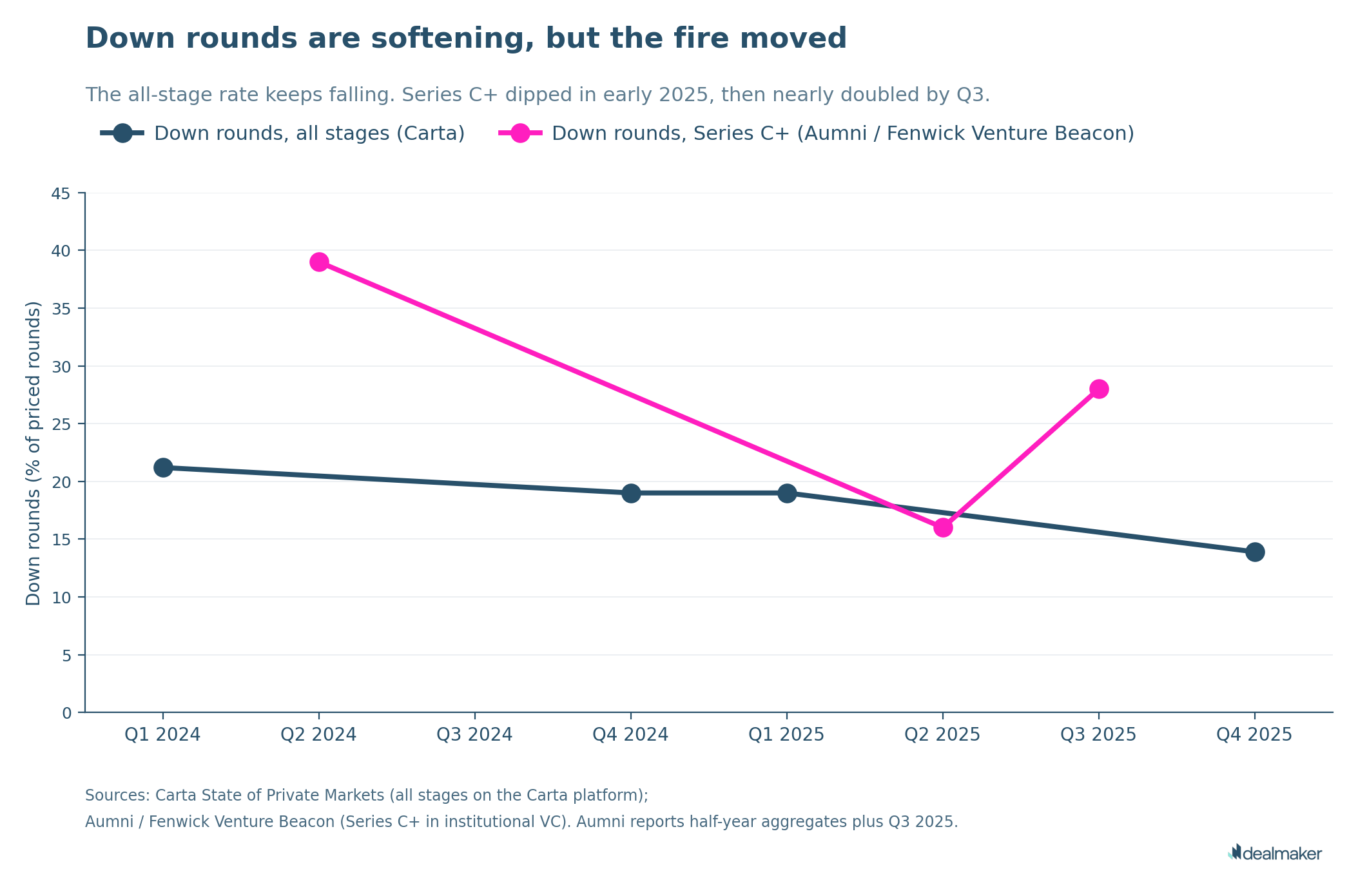
Down rounds are usually predictable, which means they're usually avoidable. By the time a term sheet lands with a valuation below your last round, the signs were visible for months. This is a playbook, not a market explainer: what to watch, why timing changes your leverage more than anything else, and the three real options you have if you're already late.
Four signals are worth tracking on a rolling basis, not just when you start thinking about your next raise.
Runway. The number of months until you run out of cash at your current burn. Once this drops below nine months, you're fundraising from a position where investors know you don't have room to negotiate.
Burn multiple. Net burn divided by net new revenue. A rising burn multiple, spending more to generate the same or less growth, is the clearest early warning that your unit economics are moving the wrong way, well before it shows up in a valuation conversation.
Comps compression. Valuations in your category move even when your business hasn't changed. Comparable company multiples can compress across an entire sector, sometimes from macro conditions, sometimes because a subsector falls out of favor with VCs for reasons that have nothing to do with your metrics. If your comps are compressing, your next round is being priced against a shrinking benchmark whether you raise now or in six months.
Investor sentiment. Slower response times, more diligence requests, term sheets that take longer to materialize. This one is qualitative, but it's often the earliest signal, before the data catches up.
The single biggest lever a founder has over a down round isn't the pitch, it's timing. A founder raising with twelve months of runway is negotiating from strength. A founder raising with four months of runway is negotiating from necessity, and investors price necessity.
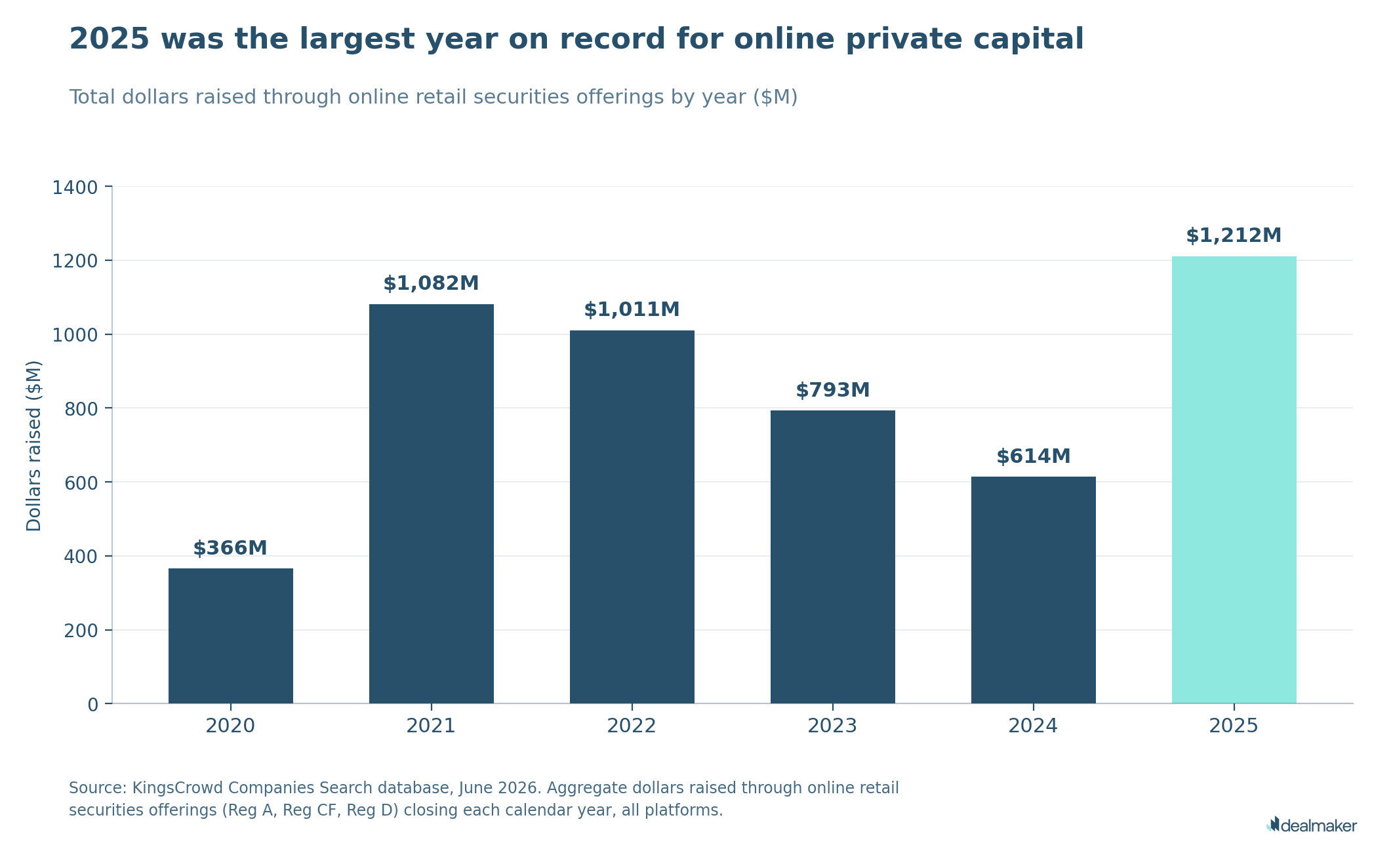
This is also why treating alternative capital sources as a backup plan is a mistake. Retail capital gets treated as Plan C by most founders when the pool of capital it draws from dwarfs the entire venture market. The founders who avoid down rounds aren't the ones with better negotiating skills, they're the ones who built a second capital option before they needed it, so waiting for VC terms to improve was never their only path forward.
If the indicators above already flashed red and you're negotiating from a weaker position, you still have three real paths. Taking whatever the first term sheet offers isn't one of them.
Take the round at a lower valuation, with the dilution, liquidation preference stacking, and control concessions that come with it. This is the default path, and sometimes the right one, but it should be a choice, not the only option you considered.
Default-alive means your current burn and revenue trajectory gets you to profitability without raising again, a term coined by Paul Graham. Cutting to default-alive means reducing burn until that's true, which makes the down round unnecessary rather than merely survivable. It's the slowest option and the one that costs the least in equity.
This is the option most founders don't know they have until it's too late to set up properly. A community round, funded by your own customers and audience rather than institutional investors, resets the valuation conversation without going back to VCs on worse terms. Pacaso raised $200M from VCs before opening its cap table to 17,500 retail investors for $72.5M through Regulation A+, and its CEO has been explicit that this wasn't a fallback, it was a deliberate strategy that built a customer base at the same time it built a cap table. The mechanics behind that kind of raise are covered in DealMaker's guide to Regulation A+, and the broader equity crowdfunding landscape if Reg A+'s scale isn't the right fit yet.
None of these three options is universally right. The choice depends on how much runway you actually have left, how much control you're willing to trade, and whether your customer base is large and engaged enough to fund a community round on a workable timeline.
If you have more than six months of runway: cutting to default-alive is worth modeling first, it's the only option that doesn't cost equity.
If you have an engaged customer base and less than six months: building a liquidity mechanism is worth evaluating even under time pressure, retail raises can move faster than a traditional VC process once the offering is structured. Founders across categories VCs treat differently have made this call deliberately rather than defaulting to whichever investor was willing to write a check.
If neither applies: resetting on harder terms may be unavoidable this round, but it doesn't have to be the plan for every round after. Comparing what retail capital offers against a traditional VC round before you sign anything is worth the hour it takes.
The founders who avoid down rounds treat this as infrastructure, not an emergency lever. Building a retail or community capital option while your business is healthy means it's ready to use exactly when a VC-only path would force a reset on someone else's terms.
If you're evaluating whether this fits your business, DealMaker's overview of Reg CF, Reg A, and Reg D is the fastest way to see which mechanism matches your stage and raise size, and the full guide to raising capital online covers what building and running one of these raises actually looks like end to end.





.png)