Raise Capital
Products
Resources

December 8, 2025
The modern capital-raising landscape looks nothing like it did five years ago. Where founders once relied on spreadsheets, email chains, and disconnected databases to track investor interactions, today’s most successful companies orchestrate campaigns through integrated capital campaign management systems and an investor portal that handle everything from investor verification to SEC compliance to real-time performance analytics. AI tools are now used for predictive modeling and prioritizing prospects, enhancing fundraising strategies through advanced data analysis. This shift from manual processes to the capital raising process using automated capital raising software isn’t just about operational convenience; it also boosts investor engagement. It’s fundamentally changing how companies raise capital, how quickly they close rounds, and whether they can build permanent investor communities or just execute one-time transactions.
The companies raising the most capital today share something in common: they’ve moved beyond treating fundraising as a periodic event and started building permanent capital campaign management infrastructure. They understand that modern fundraising requires coordination across major campaigns, multiple channels, important documents, regulatory frameworks, and investor segments simultaneously, and they’ve adopted fundraising software to make this possible. Automated workflows now streamline investor onboarding, document management, and capital raising, reducing manual work and accelerating deal closing. Choosing the right tools and platforms that offer seamless integrations is essential to maximize operational efficiency and simplify complex investment processes.
Capital raising has become more complex, not simpler. Companies navigate three distinct regulatory pathways (Reg CF, Regulation A, and Regulation D), each demanding real-time visibility and a meticulously structured campaign plan to attract potential investors. They must coordinate marketing, verify investor accreditation, conduct KYC/AML screening, manage SEC filings, and prepare comprehensive financial reports.
Traditional approaches to managing this complexity don’t scale. Manual spreadsheets create data silos and complicate the fundraising process. Email-based communication fragments investor information across threads. Disconnected systems mean compliance teams work blind. When something breaks, you don’t know until it’s too late—this underscores the need for careful planning with a focus on data security and strict alignment with industry standards to ensure transparency and regulatory compliance.
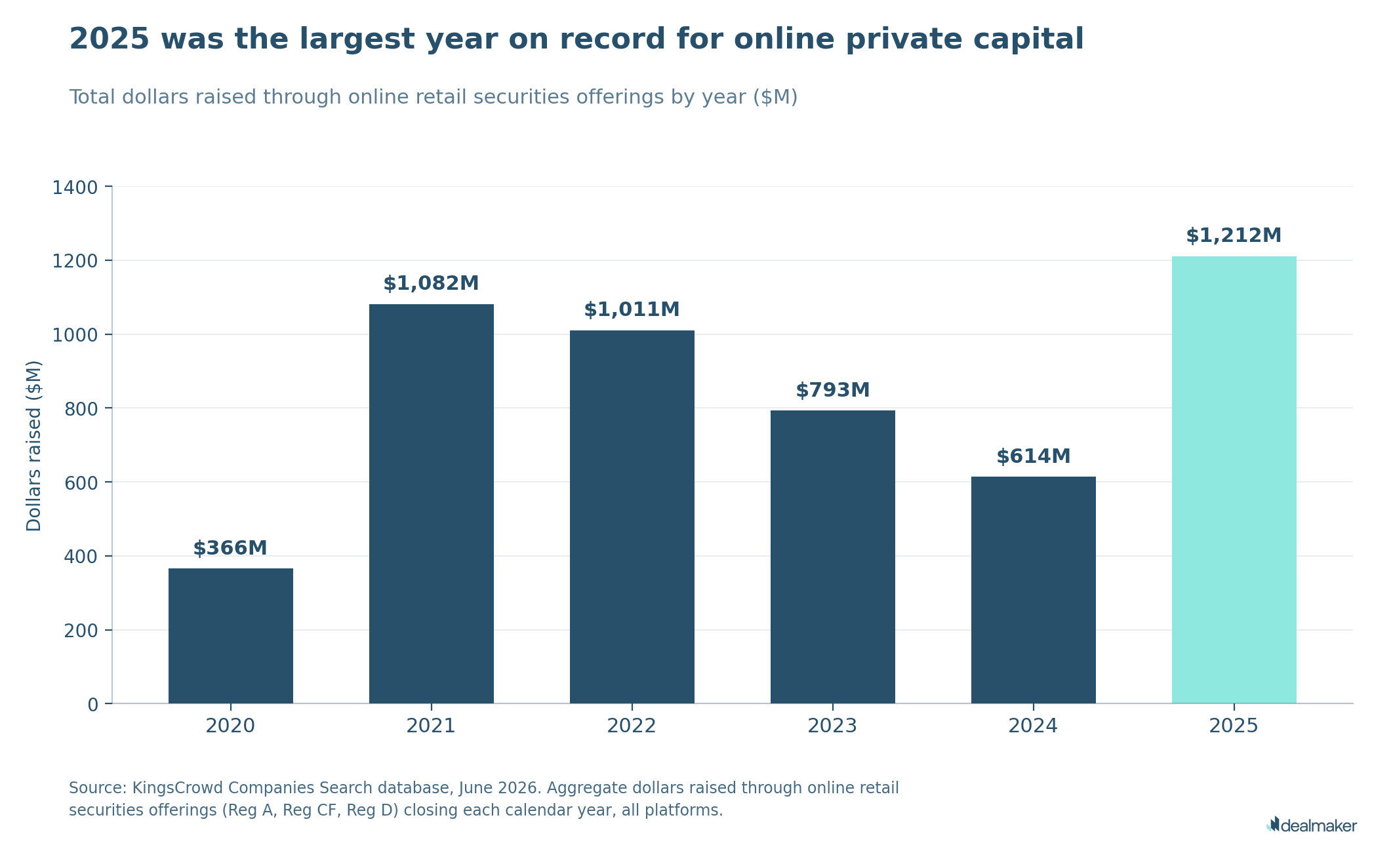
The data reveals the cost of poor capital campaign management. According to KingsCrowd’s 2024 data, the success rate for Regulation Crowdfunding campaigns is 69% for issuers meeting minimum goals—meaning nearly one-third of campaigns fail to reach their targets. Investment crowdfunding raised $447.4 million in the first half of 2025, representing 60% year-over-year growth, with Regulation A+ showing particularly strong momentum at 157% growth. But this aggregate growth masks a critical insight: most organizations achieving success have invested in systems and processes. Those that haven’t face predictable friction.
Research from the National Venture Capital Association shows that companies raising under modern frameworks are increasingly using automated systems for investment management to manage complexity. The reason is straightforward: fundraising automation platform adoption, along with flexible integrations, directly correlates with faster closes, higher conversion rates, and better investor retention.
Before diving into technology solutions, founders need to understand the regulatory landscape shaping capital campaign strategy and engage with key stakeholders. The SEC offers three primary pathways for raising capital, each with distinct implications for your campaign structure, investor reach, and ongoing obligations.
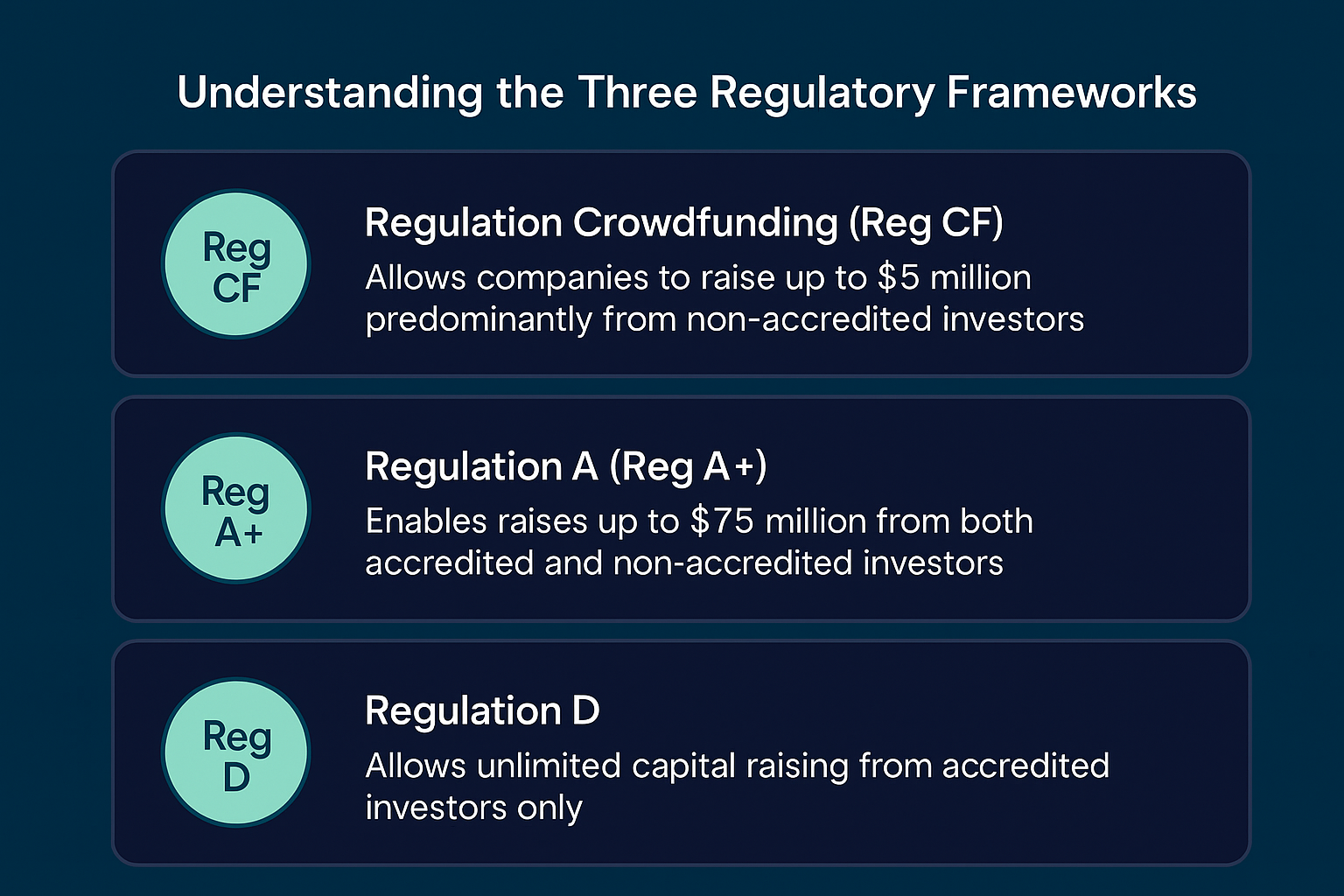
Regulation Crowdfunding (Reg CF) allows companies to raise up to $5 million predominantly from non-accredited investors, essentially the wider public. The compliance burden is lighter than larger offerings, making it attractive for early-stage companies. You need CPA-reviewed financials (not audited) for most first-time issuers. Campaign timelines typically run 4-7 months, which makes understanding the path forward essential . Since 2016, approximately 3,800 companies have successfully raised capital through Reg CF, with total capital raised exceeding $1.3 billion across 8,400 filings as of May 2025. Companies must file Form C through EDGAR for Reg CF offerings.
Regulation A (Reg A+) enables raises up to $75 million from both accredited and non-accredited investors. This ultimate guide framework requires audited financials and ongoing SEC reporting, but provides federal preemption from state securities laws. It's the pathway for growth-stage companies ready to handle more substantial compliance infrastructure. Since 2015, over 800 issuers have raised $9.4 billion through Regulation A offerings. Companies file Form 1-A for Reg A+ offerings.
Regulation D allows unlimited capital raising from accredited investors only. Rule 506(b) prohibits general solicitation but allows raising from your existing network. Rule 506(c) permits general solicitation provided all investors are verified as accredited. Companies file Form D through the SEC's EDGAR database, ensuring that all sensitive data is managed correctly .
The choice between these frameworks shapes everything downstream: your target investor profile, your marketing approach, your documentation requirements, and your ongoing compliance obligations. Sophisticated companies layer all three, starting with Reg CF for community validation, graduating to Reg A as capital needs increase, and running Reg D rounds simultaneously for institutional investors. This requires capital campaign management infrastructure that can handle multiple regulatory pathways at once and support your own capital campaign .
A successful campaign relies on fundraising software that integrates six essential layers of functionality, including key features like fundraising dashboards.
Capital campaign management in fundraising software organizes campaigns, facilitates real-time updates, and coordinates messaging across all channels simultaneously, which is critical for managing investor relationships. This level of orchestration would be impossible to manage manually.
Compliance Automation and SEC Filing Management
The regulatory burden of modern fundraising is substantial. Companies must file Form C (for Reg CF), Form 1-A (for Reg A), or Form D (for Reg D). They must maintain accurate records of investor accreditation status, conduct KYC (Know Your Customer) and AML (Anti-Money Laundering) screening, and track state-by-state registration requirements.
SEC compliance automation has evolved dramatically. Leading platforms now automate these workflows, reducing human error and ensuring campaigns stay compliant as regulations evolve. According to recent industry data, KYC automation for financial institutions achieves 99.1% accuracy with support for 10,000+ ID types across 200+ countries. This level of precision, applied to capital raising, dramatically reduces compliance risk. Modern platforms achieve pass rates exceeding 99%, significantly outperforming industry averages.
Investor Pipeline Management with Lead Scoring
Effective capital campaign management systems apply sophisticated pipeline logic to institutional and retail investor prospects. They track the entire investment process through key stages—awareness, consideration, commitment, and completion—enabling accurate revenue projection and bottleneck identification.
These platforms utilize advanced lead scoring, rating prospects based on engagement signals and investment history. By identifying which segments drive the highest check sizes and conversion rates, this data-driven approach replaces guesswork with intelligence. You can strategically allocate resources toward the segments most likely to convert, maximizing the efficiency of your capital campaign and creating a compelling case for investment .
Document Management and Offering Circulars
Raising capital generates enormous amounts of documentation: offering circulars, subscription agreements, investor accreditation forms, K-1 distributions, financial statements, and regulatory filings. Modern platforms maintain centralized repositories where all documents are version-controlled, digitally signed, and accessible to the right stakeholders. When a legal update requires document revision, the system can push updates to investors and track acknowledgment. When an audit requires documentation, everything is instantly retrievable.
Performance Analytics and Real-Time Dashboards via Automated Capital Raising Software
Automated capital raising software surfaces real-time metrics in dashboards, including immediate access to daily run rates, investor acquisition cost by channel, and average check size trends. Research on fundraising KPIs shows that organizations tracking both leading and lagging KPIs have significantly better understanding of current performance and future trajectory. Leading KPIs like investor retention rate, average investor growth, and engagement metrics predict future performance. Lagging KPIs measure results.
Automated capital raising software surfaces these metrics in real-time dashboards. It shows daily run rates, milestone achievement speeds, investor acquisition cost by channel, average check size trends, and predicted close dates. It enables A/B testing of messaging, landing pages, and investor tiers. It forecasts whether a campaign will hit its target based on current velocity.
Integration Capabilities Across Your Tech Stack
Modern fundraising requires coordination across CRM systems, payment processors, legal review workflows, and investor communication platforms. Leading campaign management systems integrate deeply with these fundraising tools, eliminating data silos and manual data entry. When an investor commits through the campaign portal, that information flows automatically to the CRM, triggering follow-up sequences and updating pipeline forecasts. When payment is processed, compliance workflows are triggered. When legal review is complete, investor communication is automatically sent.
Choosing the right fundraising software to support all fundraising activities is key to a successful campaign.
Foundation Layer: Self-Hosted vs. Marketplace Platforms
When building your capital campaign tech stack, the foundational decision is between self-hosted solutions and marketplace platforms. Self-hosted solutions like DealMaker let companies maintain their brand identity, own their investor data, and build lasting relationships without competing for attention on a crowded marketplace. This choice fundamentally shapes your brand control, data ownership, and long-term investor relationships.
Self-hosted platforms provide a brand-first, white-labeled experience hosted on your own site. There are no third-party accounts, no competing offers on the page, and no dilution of your brand identity. Your investors engage directly with your company, not through an intermediary marketplace where dozens of other offerings compete for attention.
The strategic advantages of self-hosted infrastructure extend beyond branding:
Data transparency and ownership across the full funnel. Self-hosted solutions let you track site visits, checkout starts, and investor completions with complete visibility. Critically, you retain the entire audience—including the 97% who browse but don't invest—for retargeting and future raises. Marketplace platforms typically restrict this data, preventing you from building a proprietary investor database.
Elimination of competition for investor attention. Marketplace "shopping mall" portals feature multiple offerings competing for the same eyeballs and communications space. Your campaign appears alongside competitors, and investors who come to see your offering may leave to invest in someone else's. Self-hosted eliminates this dynamic entirely.
Full-funnel performance marketing and optimization. Self-hosted platforms enable integrated analytics, real-time dashboards, and A/B testing to improve conversion and channel efficiency. You can optimize every step of the investor journey—from first impression to final investment—using your own data and testing infrastructure.
Fast, conversion-optimized checkout. Modern self-hosted platforms offer sub-minute, mobile-first investor checkout with modern payment methods including credit card, Apple Pay, Google Pay, and bank transfers. Reducing friction at checkout directly improves completion rates.
Integrated capital-raise infrastructure. Self-hosted solutions often include Broker-Dealer services, Transfer Agent capabilities, and compliance workflows in a single platform, reducing operational risk and creating a seamless end-to-end process.
Shareholder engagement and repeatability. Purpose-built tools for post-close shareholder engagement communications and follow-on raises help you build a durable investor community and permanent fundraising engine, rather than starting from scratch with each campaign. Over 80% of companies using sophisticated self-hosted platforms conduct multiple raises, demonstrating the power of maintaining ongoing investor relationships.
Strategic flexibility. The most sophisticated approach uses self-hosted as the foundation, with optional marketplace listings for incremental reach when it makes sense—a hybrid strategy that captures the benefits of both models.
The key principle: own your brand and audience, don't rent them. Control the full investor experience on your site and keep your community for future activations. Data is the difference between one-time transactions and permanent capital-raising engines.
Marketing Automation and Audience Engagement
Email sequences, retargeting pixels, content distribution, and social media management need to work in concert. Email personalization research shows that personalized emails see average open rates more than 82% higher than generic emails, making segmentation and personalization critical. Fundraising automation platforms integrate with email tools to deliver personalized sequences based on investor behaviour, engagement level, and investment stage.
Investor Verification Infrastructure
KYC/AML systems have become more sophisticated and more essential. Modern identity verification technology achieves 99.1% accuracy while supporting multiple document types and international compliance requirements. These systems verify investor identity, confirm accreditation status, and screen against sanctions lists, all automatically. They reduce friction in the investor onboarding process while strengthening compliance.
Payment Infrastructure
Modern campaigns accept multiple payment methods: ACH transfers, wire transfers, credit cards, and international payment options. Payment processors must integrate seamlessly with campaign systems, triggering compliance workflows and investor communication upon successful payment. They must handle refunds, track payment status, and reconcile with financial records.
Investor Communication and Engagement
Investor portals, update distribution systems, and Q&A management tools keep investor communities engaged between capital raises. Research shows that organizations, including the organization's leaders, that maintain regular, meaningful communication see investors give more frequently and at higher levels. Modern fundraising automation platforms treat investor communication as a permanent feature, not something that ends when a campaign closes.
Analytics and Attribution Modeling
Fundraising analytics for growth companies involves studying fundraising data to find trends and measure performance. Which channels drive the highest-quality investors? Which messages resonate most? Which segments convert at the highest rates? Automated capital raising software answers these questions automatically, providing the intelligence needed to optimize campaigns in real-time.
Technology enables strategy, but strategy drives results. The most successful capital campaigns follow a predictable optimization sequence, guided by continuous capital campaign management.
Pre-Launch: Building Momentum Before Day One
Successful capital campaigns start months earlier with waitlist building and audience warming. Companies refine their investment thesis based on early feedback, ensuring the campaign plan is validated before launch. Many leading companies use reservation campaigns during this phase—allowing early supporters to commit before the official raise begins, creating social proof and reducing friction on launch day.
Launch Surge: Capturing First-Mover Advantage
The first 48 hours of a capital campaign are disproportionately important. Successful campaigns strategically mobilize their core community and generate early social proof.
Mid-Campaign: Optimization and Reallocation
As campaigns progress, data from the automated capital raising software reveals what's working. Sophisticated capital campaign management teams adjust in real-time, increasing spend on high-performing channels and refining messaging.
Closing Surge: Deadline Urgency and Social Proof
As campaign deadlines approach, urgency intensifies. Data shows that capital campaigns often see their highest conversion rates in the final week.
Post-Campaign: Converting Interest Into Ongoing Engagement
The campaign doesn't end when the funding target is reached. Sophisticated companies immediately begin converting one-time backers into repeat investors, building long-term investor relations.
Measuring Success: The Right KPIs for Capital Campaigns
Tracking the right metrics transforms fundraising from guesswork into science. Leading indicators predict future performance; lagging indicators measure results.

Leading Indicators: Predicting Campaign Success
Website traffic, email open rates, social media engagement, and investor pipeline progression are leading indicators. They signal whether momentum is building before money actually arrives. Research shows that investors who receive regular, meaningful communication give more frequently and at higher levels. By tracking touchpoint completion, executives can predict future investment patterns and address engagement gaps before they impact revenue.
Conversion Metrics: Measuring Investor Acquisition
Visitor-to-investor conversion rates, average check size, cost of capital acquisition, and investor acquisition cost by channel reveal the efficiency of your fundraising machine. These metrics answer fundamental questions: How many prospects do you need to generate one investor? What does each investor cost to acquire? Which channels deliver the lowest-cost, highest-quality investors?
Velocity Measurements: Tracking Campaign Momentum
Daily run rate, milestone achievement speed, and time-to-close reveal whether campaigns are accelerating or decelerating. Campaigns that maintain or increase daily run rates throughout their duration typically exceed targets. Campaigns that see declining velocity often miss targets.
Quality Metrics: Building for Repeat Success
Investor retention rates, referral rates, and Net Promoter Score (NPS) reveal whether you're building a permanent investor community or just executing one-time transactions. Companies need to retain some portion of their capital base in order to continue operating and grow. Investors value this ratio to help predict where companies will be in the future. The same logic applies to investor retention. Companies that retain investors for follow-on rounds dramatically reduce future fundraising friction. Leading platforms report that over 80% of their customers conduct multiple raises, demonstrating the value of building permanent investor infrastructure.
The most sophisticated companies have shifted their mindset entirely. Rather than viewing capital raises as discrete events, they treat private equity fundraising as a permanent capability: an always-on system that generates capital continuously as the business grows.
This shift changes everything. Instead of a 3-month campaign sprint, companies run rolling investor programs. They maintain continuous communication with their investor community. They create multiple pathways for new investors to participate. They use each raise as an opportunity to deepen community relationships, not just extract capital.
LiquidPiston exemplifies this approach. The company raised over $50 million across five consecutive campaigns through DealMaker, demonstrating the power of building a permanent fundraising engine. Rather than treating each raise as a one-off event, they built investor infrastructure that strengthened with each campaign. Their investor base grew from thousands to tens of thousands across campaigns. Each successive raise became more efficient, not less.
Similarly, EnergyX leveraged DealMaker's self-hosted infrastructure to raise $75 million from over 40,000 investors using a hybrid approach that combined Regulation CF and Regulation A+. By maintaining control over their brand experience and investor data, EnergyX built a community that could be activated for future rounds, transforming what could have been a single transaction into the foundation of a permanent capital-raising engine.
Miso Robotics provides another compelling example, raising over $100 million from more than 40,000 retail investors through DealMaker's platform. Their self-hosted approach allowed them to see exactly how many leads they had, target investors directly, and understand what was working in their marketing efforts. This data granularity helped them increase ticket sizes by 68% compared to previous solutions, while building an engaged community of investors who became brand ambassadors.
What makes these strategies remarkable is consistency. These companies didn't raise once and disappear. They came back to their investor communities repeatedly, each time with new milestones, new traction, and new reasons for existing investors to double down. This continuous engagement transformed what could have been separate fundraising efforts into a single, compounding capital-raising engine. These successful crowdfunding raises demonstrate that building permanent infrastructure yields compounding returns.
The data supports this approach. According to KingsCrowd's 2024 research, campaigns that successfully meet their minimum goals demonstrate fundamentally different characteristics than those that don't—they've built systems, not just executed tactics. The companies achieving this efficiency have built permanent infrastructure supported by fundraising automation platforms to raise funds , not temporary campaigns. In 2024, Regulation CF campaigns raised $343.6 million total, with the top three platforms accounting for 67% of all successful raises.
The capital-raising landscape will continue to evolve. Regulatory frameworks will adapt. Technology will become more sophisticated. But the fundamental principle remains: companies that treat fundraising as a core capability, supported by integrated technology, driven by data, and focused on building permanent investor communities will consistently outpace competitors who view capital raises as occasional events.
The shift from spreadsheets to automated capital raising software isn't just about operational efficiency. It's about fundamentally transforming the relationship between companies and their investors, from transactional to permanent.
For founders and CFOs evaluating capital-raising infrastructure, the question isn't whether to modernize. It's how quickly to move. The most successful capital campaigns of tomorrow will be powered by the integrated, data-driven, compliance-automated systems of today.





.png)